Every year, thousands of Texans face criminal charges without adequate legal representation.
The public defenders who serve them are under-resourced, overworked, and systemically unsupported. We gather and visualize data about public defense quality at the county level so the system becomes visible, measurable, and changeable.
The Landscape of Public Defense in Texas
Texas does not operate a unified public defense system. Responsibility for providing and funding indigent defense rests with individual counties, resulting in substantial variation in the availability of public defense institutions, attorney workloads, and access to counsel across the state.
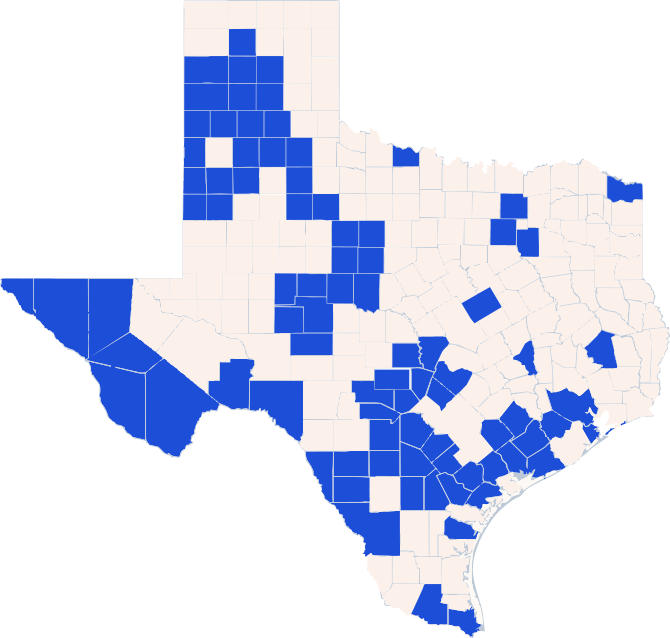
The data below illustrates three measurable indicators of these county-level differences: excessive attorney caseloads, the absence of institutional public defense, and limited access to counsel at a defendant's first appearance.
28%
Cases Handled by High-Volume Attorneys
The percentage of appointed cases disposed in Texas (2022 – 2023) that were represented by attorneys who also disposed more than 300 cases during the same period.1
66%
Counties Without a Public Defense Institution
The percentage of Texas counties - representing approximately 11.4 million residents - that did not have a public defender office or other indigent defense institution as of October 2025.2
90%+
Counties Without Counsel at First Appearance
The percentage of Texas counties that do not provide defense counsel at the first appearance where bail is set for adults.3
The Human Impact of an Overloaded System
Underinvestment in public defense, excessive attorney workloads, and gaps in representation are interconnected features of Texas's indigent defense system. Together, they reduce meaningful access to counsel at critical stages of a case, contributing to unnecessary detention, increased pressure to accept plea agreements, and collateral consequences that extend well beyond the resolution of a criminal case.
Underfunding
Overburdened Attorneys
No Counsel at Magistration
Underfunding Public Defense
Texas counties spent about $14 per capita in 2023.4 This is $6 less per person than the national average ($20 per state).5
Lack of funding is a large driver of high caseloads. National standards recommend between 7-59 felonies or 93-150 misdemeanors worth of work per year.6 By comparison, in Texas in 2023, about half of cases disposed in Texas were appointed to attorneys who disposed 200 or more cases that year.7
Excessive Caseloads
One researcher estimates that around 40% of the accused in Texas are represented by someone with an excessive caseload.8
In addition, each year between 2015 to 2023, the number of appointed defense attorneys statewide has decreased, from 6,249 to 4,993 (20%).9 With fewer and fewer attorneys available, pressure mounts to continue assigning large volumes of cases to the same few attorneys.
Missing Counsel at First Appearance
Fewer than 5-10% of counties in Texas provide counsel at magistration, a person’s first appearance where bail is set.10
Decisions made at this stage can determine whether someone returns home or remains in jail while awaiting trial. For thousands of Texans, even a misdemeanor charge can trigger consequences that extend far beyond the courtroom, affecting employment, housing, and financial stability for years.11
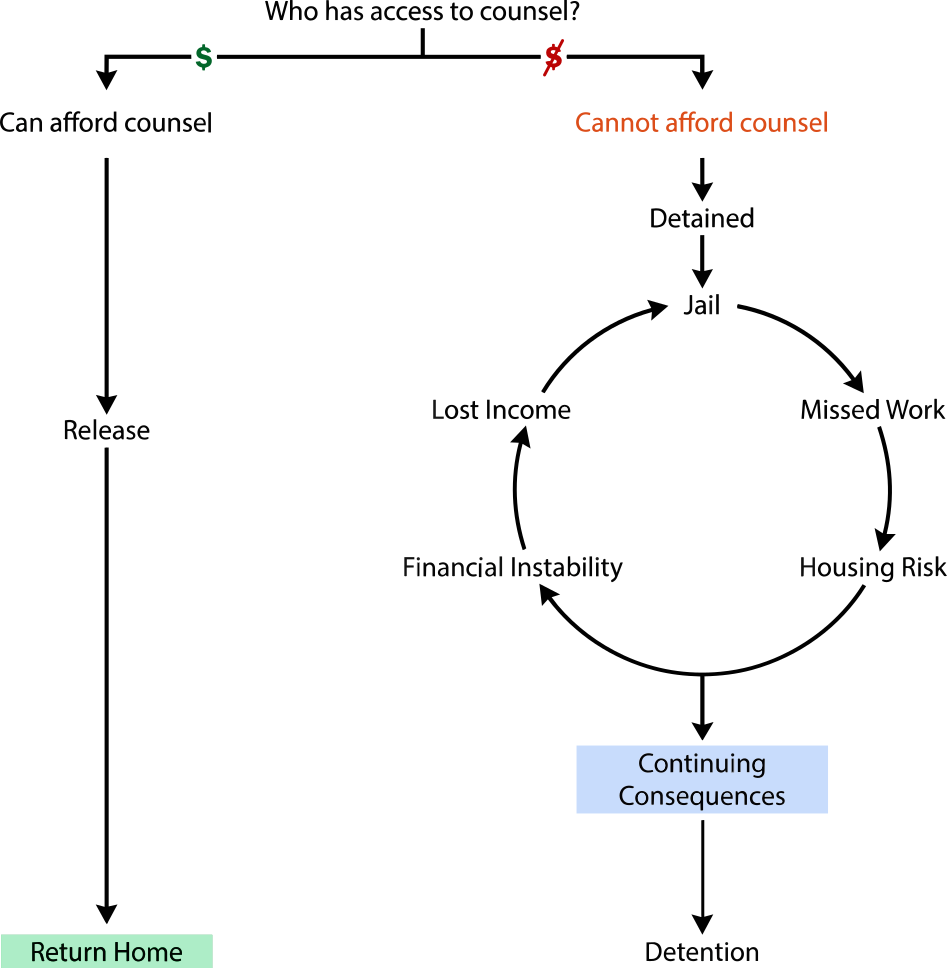
At the first appearance, access to counsel can shape whether someone returns home—or enters a cycle of detention and cascading consequences.
The Roots of the Crisis
Every year, over half a million people are arrested in Texas.12 Most are too poor to afford their own private defense attorney.
The outcome is longer jail stays, more convictions, and higher costs to people in their ability to keep their apartment, raise their children, or work a job.13
People accused of crimes may plead guilty and spend weeks, months, or even years in jail before they are released, not because they’re dangerous, but because they can’t pay bail or afford a private attorney to argue for affordable release options.14 Unnecessary incarceration leads to people losing jobs, losing custody of their children, and increases their likelihood of coming back into the system.
The problem is systemic. Poor rural counties have a harder time affording to build public defender offices. Officials trying to balance public safety and limited budgets often lack access to reliable data that could help them identify ineffective attorneys and improve outcomes.
At the state level, oversight is thin. The Texas Indigent Defense Commission has only a few monitors, visiting just a handful of counties each year.15 It takes decades to assess all 254 counties. Even well-intentioned counties are left without the guidance or tools they need to improve the quality of their indigent defense services.